Countertops take a beating. Hot pans, knives, spilled wine, homework, groceries, the mail. The right material depends on how you cook, how much upkeep you're willing to do, and the look you're after. Here's how the main countertop materials stack up.
Where countertops go
Kitchen counters and islands are the big ones, and they're where durability matters most. But you'll also need tops for bathroom vanities, a folding counter in the laundry room, and any bar, desk or built-in that needs a hard, finished surface. Vanities are a good spot to try a bolder pattern, since there's less of it.
Quartz countertops
Quartz is engineered. It's crushed natural quartz bound together with resin and formed into slabs. Because it's made rather than quarried, the color and pattern are consistent from slab to slab, and you can get everything from solid white to a convincing marble look.
Quartz doesn't need sealing, and it shrugs off most stains. The one thing to watch is heat. Use a trivet instead of setting a hot pan right on it.
Granite and other natural stone
Granite, marble and other natural stone come straight out of the ground, so every slab is one of a kind. That's the whole appeal: real veining and depth that nobody can copy.
Natural stone varies a lot from one type to the next. Many stones do best with sealing every so often, and softer stones like marble can etch from acidic spills like lemon juice or wine. If you're looking at a specific stone, ask how it holds up.
Quartz vs. granite: the short version
If you want a consistent look and almost no upkeep, quartz is hard to beat. If you want a slab that's truly one of a kind and you don't mind a little care, natural stone is worth it. Plenty of people end up using both, say quartz on the perimeter and a stone slab on the island.
Sintered stone
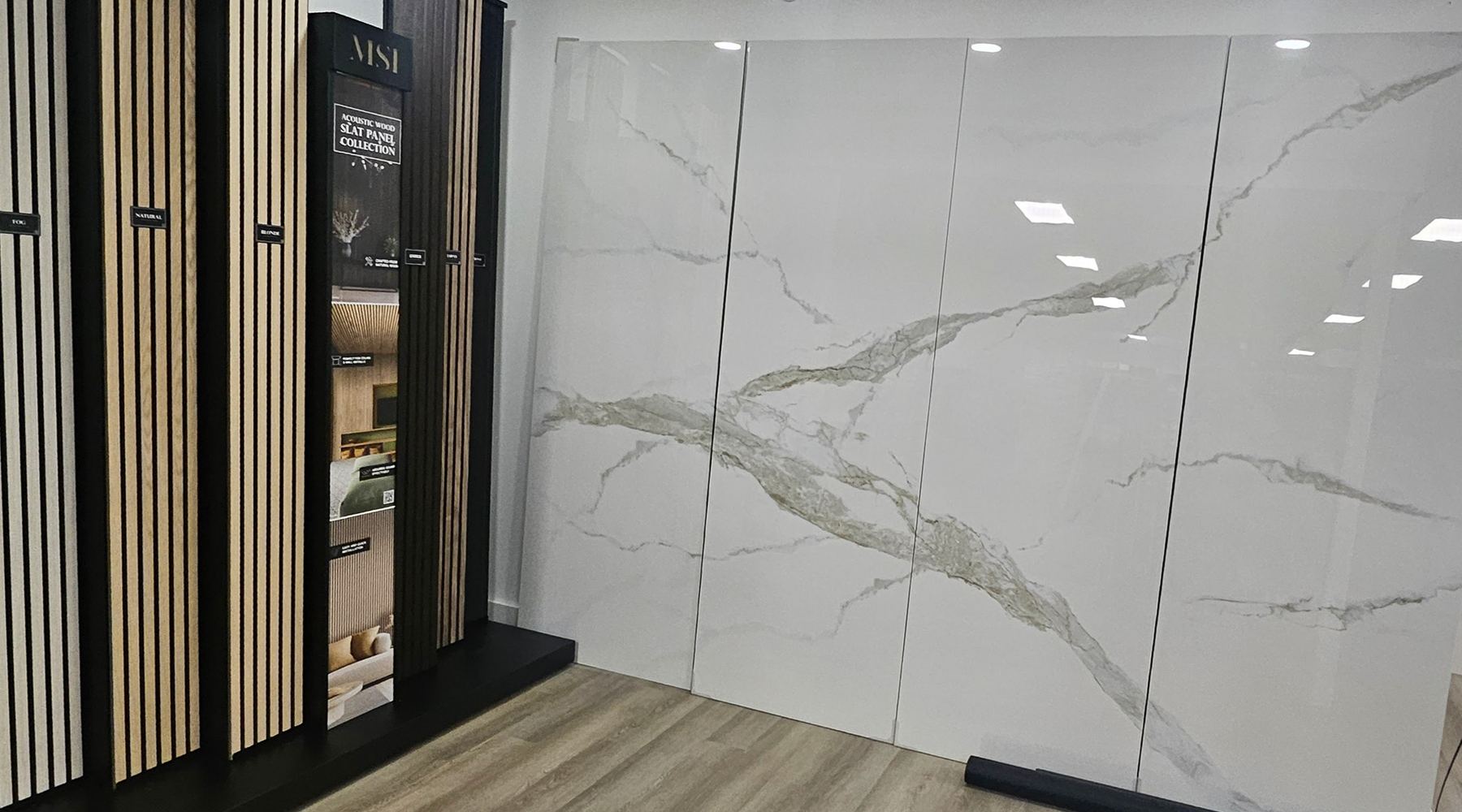
Sintered surfaces are made from natural minerals pressed together under very high heat and pressure. The result is dense and hard, and it holds up well to heat, scratches and stains. It's often made in thinner, larger slabs, which gives you a sleek, nearly seamless look. Neolith is one of the best-known names.
Edges and finishes
The edge changes the look more than people expect. A simple eased edge, just slightly rounded, is the most common. Beveled, bullnose and ogee edges add detail. A waterfall edge carries the countertop down the side of an island to the floor, which makes the island the centerpiece of the room.
For the surface, polished is shiny and shows off the color. Honed or matte is softer and a little more modern.
What to check before you pick a slab
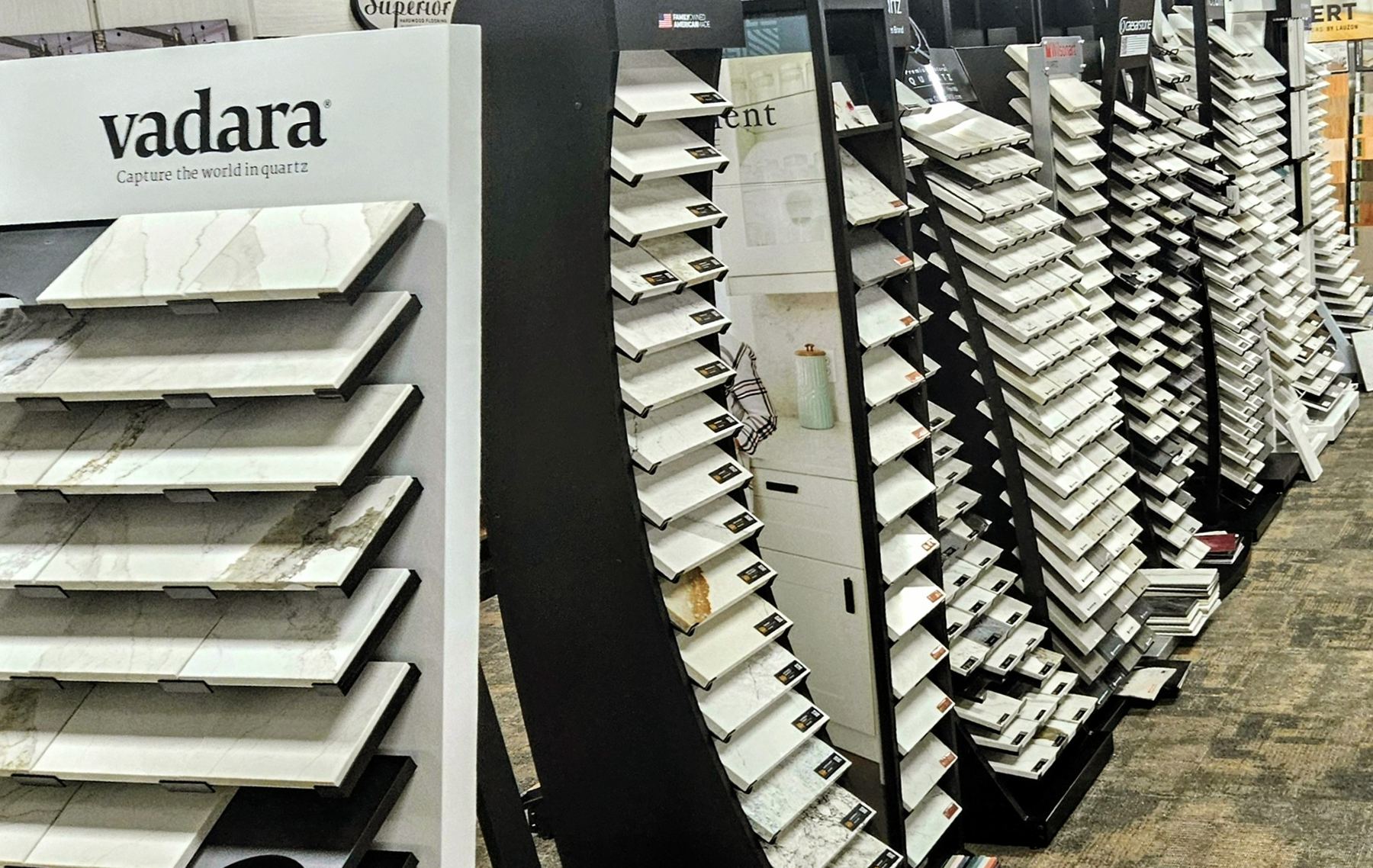
Look at the full slab, not a chip. A pattern that's lovely in a four-inch sample can look very different across an eight-foot island. Hold it up against your cabinet door and floor sample, because a countertop can look perfect on its own and fight with everything around it. On a big kitchen, ask where the seams would go. And be honest about upkeep. If you never want to think about sealing, that narrows the field.
Countertops at Builders Design Center
We carry quartz, natural stone and sintered surfaces from vendors including Cambria, MSI and Neolith, and we have full-size slab displays so you can see the real thing. Our cabinets and tile are under the same roof, so you can set your countertop pick right next to the cabinet door and backsplash you're considering.
See our countertops, or stop by the showroom at 647 US-1 #11 in York, Maine. We're open Monday to Friday 9 to 5 and Saturday 9 to 2, and you can reach us at (207) 430-1111.